

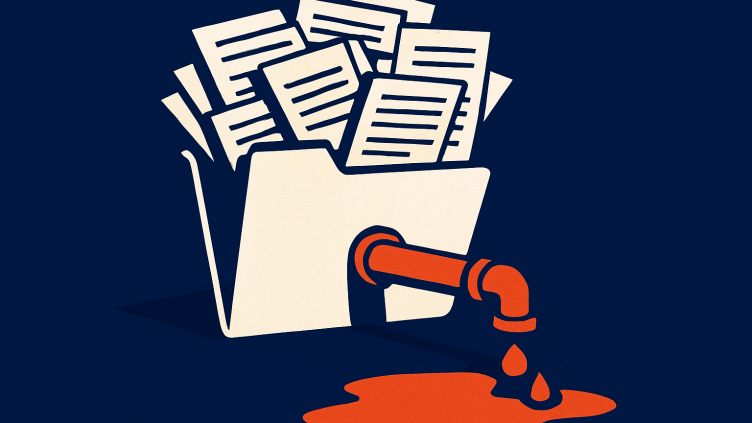
If the File Is Called final_FINAL_v7, Your Process Is Leaking
By PhoneFlow AI
Everybody gets the joke. If a file is named final_FINAL_v7, it almost certainly isn't final, and nobody feels completely safe opening it.
This points at a real operational smell, messy filenames rarely come from careless people. They usually show up when ownership is fuzzy, handoffs are informal, and nobody trusts a single source of truth.
Filename chaos usually isn't a naming problem. It's a process problem wearing a filename costume.
A healthy process doesn't force people to encode the full history of a document into the filename. Once that starts happening, your team is compensating for a system they don't trust.
People leave breadcrumbs because they don't know who owns the current draft, where the approved version lives, or whether someone else already changed it. So they push status into the only thing they control. The filename.
What the filename is trying to tell you
And there is data behind that instinct. Adobe reports that 22% of non-creatives struggle with version control during review, 19% struggle with file sharing, and 30% deal with long review wait times.
Read plainly, that's not a filename issue. That's a coordination issue.
It gets worse when work speeds up but process doesn't. Adobe also found that 72% of non-creatives and 63% of creatives are being asked to take on more projects, while 60% of both groups are expected to finish them faster.
Under that kind of pressure, weak process leaks into local workarounds. Filename inflation is one of the cleanest examples because it's visible, common, and easy to laugh at. But it's still a workaround.
The pattern stays pretty consistent across teams. People blame the mess they can see, but the root issue usually sits one layer below:
- No named owner for the document at each stage
- No rule for where active versus approved versions live
- No shared review, approval, and archive habit
The fix is smaller than most teams think
People add FINAL, then FINAL2, then USE-THIS-ONE, because the process stopped working.
One human owner, not "the team." When everybody can update the file, nobody stays accountable for what counts as current.
Then use a boring naming convention on purpose. Something like Project_Document_YYYY-MM-DD_Status. Not clever. Just predictable.
Stop policing names. Fix the trust problem.
final_FINAL_v7 isn't really a joke about disorganized people.
It's evidence that the process is asking the filename to do work the process should have done. And once you see that, the fix gets much clearer.
Don't start by policing names harder. Start by fixing ownership, handoffs, and where the approved version lives.
Once people trust the system, the filenames usually calm down on their own. If your team keeps tripping over version confusion, the smallest visible mess may be the cleanest signal underneath it.
Common questions
Why do teams end up with filenames like final_FINAL_v7?
Filename inflation is usually a process problem, not a naming problem. People push status into the filename when ownership is fuzzy, handoffs are informal, and nobody trusts a single source of truth for the current version.
How do you fix version-control chaos?
Assign one human owner rather than the team, define where active versus approved versions live, and use a boring, predictable naming convention like Project_Document_YYYY-MM-DD_Status. Fix ownership and trust first and the filenames calm down on their own.