

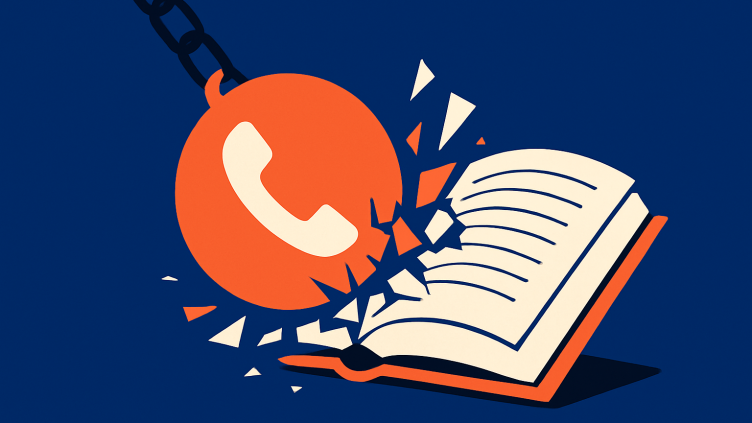
That Moment When a Spam Call Destroys Your Best Work Hour
By PhoneFlow AI
You're finally in flow. The strategy doc is clicking, the ugly problem you've been circling for days starts to open up, and then your phone lights up with an unknown local number.
So you answer. Because you run a business, and that number might be a prospect, a vendor, or a customer who needs help right now.
Instead, it's a robocall about your extended warranty, solar panels, or a loan you never asked for. And just like that, the thread is gone.
The damage isn't the 20 seconds you spent answering. It's the 20-plus minutes your brain spends trying to get back where it was.
Interruptions don't just steal time
A lot of owners underestimate this because the interruption feels small. Pick up, say hello, realize it's junk, hang up. Done.
But deep work doesn't break cleanly. Research from the University of California, Irvine has often been cited to show that "after an interruption, people can take around 23 minutes to fully return to the original task."
That number isn't magic, and it won't be exactly 23 minutes every time. But the pattern is real. Context switching is expensive.
Your brain treats a ringing phone as potentially urgent. That's the trap. You can't know it's spam until after you've already paid the cognitive cost.
And business owners live in that tension every day. Ignore unknown calls and you risk missing revenue. Answer them all and you shred your best thinking hours.
The math gets ugly fast
Let's keep it simple. Three spam calls a day doesn't sound catastrophic.
- 3 interruptions x 23 minutes = 69 minutes lost
- 69 minutes a day x 5 days = 5.75 hours a week
- 5.75 hours a week x 52 weeks = just under 300 hours a year
And that's a conservative estimate because it only counts spam calls. It doesn't count the mental drag that comes after, when you keep one eye on the phone and your attention never fully settles.
That's the part people miss. After enough interruptions, you stop attempting deep work at all. You default to shallow tasks because they feel safer.
Email. Slack. Admin. Busywork. Stuff that keeps the day moving but rarely moves the business forward.
If your phone can interrupt you at any moment, your calendar may look full while your real work keeps slipping.
Reachability shouldn't punish focus
This is why "just ignore unknown numbers" isn't serious advice for most small businesses. New customers don't arrive with perfect caller ID.
A lot of them find you on Google and call cold. Some won't leave a voicemail. Some will move to the next option in under a minute.
So yes, being reachable matters. But letting every unknown number break your concentration is a bad operating model.
The better question is simple: how do you stay available to real callers without handing your attention to spam systems and robodialers?
That's not a productivity hack. It's an operations problem. And if you solve it well, you don't just save minutes. You protect the hours where your best decisions actually happen.
Your business needs access. You need focus. Both can be true.
Common questions
How much does a single spam call really cost?
Research from UC Irvine is often cited to show it can take around 23 minutes to fully return to a task after an interruption. At three spam calls a day that is about 69 minutes lost daily, or just under 300 hours over a year.
Why not just ignore unknown numbers?
Because new customers do not arrive with perfect caller ID. Many find you on Google and call cold, and some will not leave a voicemail. Being reachable matters, but letting every unknown number break your concentration is a bad operating model.